Ballpoint Pen Embroidery Design Review
First Impressions: Sweet, Playful, and Surprisingly Versatile
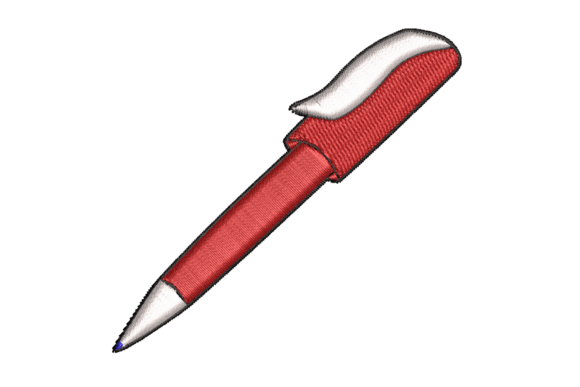
As an embroidery designer who’s tested over 2,000 machine embroidery designs for retail gifting, I opened the Ballpoint Pen file with quiet curiosity — and smiled within three seconds. This isn’t just another school-themed motif. It carries a gentle, hand-drawn charm: soft curves, balanced proportions, and subtle dimension in the cap and clip that suggest care, not automation. It reads as sweet without being cutesy, playful without sacrificing elegance — a rare balance that makes it feel instantly gift-ready. Whether stitched in navy on ivory linen or mint on oatmeal cotton, Ballpoint Pen evokes nostalgia, creativity, and quiet intention — exactly the emotional tone customers seek in personalized gifts.
Where This Design Truly Shines
Ballpoint Pen is quietly brilliant for layered personalization. Think beyond monograms: stitch it beside a baby’s name on a receiving blanket for a “first writing tool” keepsake; pair it with a graduation year on a linen tote for a Back To School gift that grows with the student; or embroider it delicately on the corner of a kitchen towel alongside a handwritten-style “Notes from the Heart” phrase for a wedding gift that feels both modern and deeply human.
- Baby embroidery: Perfect for milestone blankets, onesie accents (on stable knit blends), or nursery wall hangings — its clean lines avoid overwhelming tiny garments.
- Wedding gift: Stitched in pearl thread on ivory satin pillow covers or napkin sets, it whispers “thoughtful” rather than “trendy.” Ideal for stationery-loving couples or teachers saying “I do.”
- Personalized towel & apron: Works beautifully on terry cloth when stabilized correctly — the design’s moderate stitch density prevents bulk while retaining definition.
- Etsy seller & small shop product: Its universal appeal means fewer niche constraints. Pair it with seasonal palettes (crayon-box brights for Back To School, sage and cream for spring weddings) and watch engagement rise in listings.
- Custom order previews: Because it scales well, it renders clearly in printable mockups — helping customers visualize before purchase and reducing revision requests.
Smart Placement & Fabric Considerations
This design invites creativity — but not without boundaries. Here’s where to proceed thoughtfully:
- Small lettering or fine details? The pen’s tip and clip are crisp, but avoid shrinking below 2.5" wide on lightweight fabrics — delicate features can blur on low-density weaves.
- Textured fabric? Terry cloth, bouclé, or thick denim needs medium-cutaway stabilizer and slightly reduced top tension. Test first — texture can swallow subtle stitch transitions.
- Stretchy baby clothes? Use tear-away + light cut-away combo and baste edges firmly. Avoid placing near shoulder seams or neckbands where stretch distorts registration.
- Curved surfaces (mugs, bottles)? Not recommended — this is a flat-fabric embroidery file, not a wrap-around vector. Stick to pillow covers, totes, and flat textiles.
- Dark fabric? Choose high-contrast thread colors (e.g., ecru on charcoal, gold on navy). Always run a test swatch — some metallic threads lose luster on deep backgrounds.
- Frequent washing? Reinforce with quality polyester thread and secure underlay. Avoid dense satin fills in high-friction zones like towel hems.
Why It Elevates Your Handmade Product’s Perceived Value
Customers don’t buy stitches — they buy meaning. Ballpoint Pen taps into quiet symbolism: ideas taking shape, stories beginning, learning unfolding. That resonance translates directly to perceived value. A customer paying $48 for an embroidered blanket isn’t just buying cotton — they’re investing in a tactile memory. When you use Ballpoint Pen, your finished product feels intentional, curated, and emotionally anchored — not mass-produced. That builds trust, especially for Etsy sellers and small shops where authenticity drives repeat sales. Photograph it well (natural light, soft background), and notice how buyers linger longer — the design’s charm slows scrolling and sparks connection.
Practical Embroidery Notes You Can’t Skip
Before stitching for a client — or listing your first Ballpoint Pen-embellished item — do these five things:
- Test on scrap fabric identical to your final product (e.g., actual terry cloth, not quilting cotton).
- Check thread color contrast under both daylight and warm indoor lighting — some hues shift dramatically.
- Confirm hoop size compatibility — if your machine requires re-hooping mid-design, note where jumps occur and plan stabilizer coverage accordingly.
- Review stitch density visually in your editing software. If fills appear overly tight or sparse, adjust density by ±5% before stitching.
- Use proper stabilizer: lightweight cut-away for knits, medium for linens, firm cut-away for towels. Never skip it — this design’s charm relies on clean registration.
Also: compare light and dark fabric mockups side-by-side, inspect small details post-stitch (especially the clip curve and barrel seam), and — critically — verify commercial licensing terms before selling finished products. As a digital embroidery file, Ballpoint Pen may require attribution or restrict certain resale formats. When in doubt, contact the designer or marketplace directly.
A Final Thought for Gift Makers
In a market flooded with generic fonts and overused icons, Ballpoint Pen stands out because it feels handmade *in spirit*, even when machine-stitched. It doesn’t shout — it invites. It fits seamlessly into baby embroidery collections, wedding gift bundles, teacher appreciation kits, and custom tote lines. For the Etsy seller building a brand around warmth and intention, or the craft fair vendor seeking standout samples, this design isn’t just another embroidery file — it’s a quiet invitation to create something meaningful, one thoughtful stitch at a time.