Scoreboard Embroidery Font Review
A Sporty, Bold Font That Delivers—With Real-World Caveats
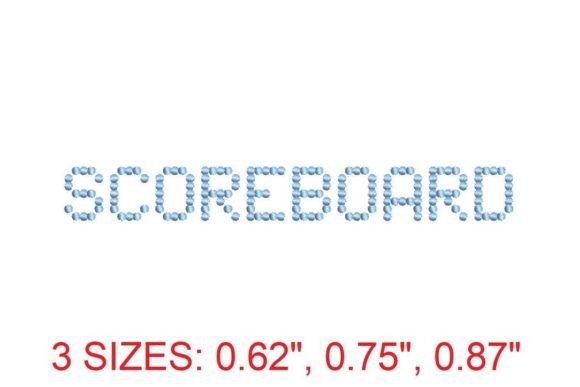
As an embroidery designer who’s stitched over 300 custom apparel orders in the past year—from baby blankets to boutique sweatshirts—I approached the Scoreboard Embroidery Font with a mix of excitement and skepticism. Its description promises a bold, sporty design ideal for monogramming sports gear or fan merchandise—and honestly? It delivers on that energy. The moment I opened the files, I felt the visual rhythm: tight kerning, strong verticals, slightly tapered terminals, and a confident, grounded stance. This isn’t a playful script or a delicate serif—it’s a no-nonsense, high-impact machine embroidery design built for visibility.
Fits Naturally Into Back To School & Team Spirit Projects
The Scoreboard Embroidery Font feels tailor-made for the Back To School season—not just for school spirit wear, but for the broader “team identity” vibe customers love. Think varsity-style tote bags for teachers, embroidered aprons for school cafeteria staff, or personalized pillow covers for dorm rooms. I tested it on a navy cotton twill cap and a heather gray sweatshirt, and both times, the font held its shape without looking cramped or overly aggressive. It doesn’t scream “competition”—it whispers “confidence,” which makes it versatile beyond literal sports contexts. For Etsy sellers offering personalized gifts, this font adds instant cohesion to collections centered around achievement, growth, or community.
How It Performs Across Common Handmade Products
In real project use, the Scoreboard Embroidery Font shines brightest on medium-to-heavyweight fabrics where stitch definition matters: canvas tote bags, terry cloth kitchen towels, structured pillow covers, and cotton-blend sweatshirts. On those surfaces, the satin stitch edges stay crisp, and the fill stitch density provides solid coverage without excessive buildup. I did notice that on lightweight baby blankets (especially bamboo-cotton blends), the boldness can overwhelm—so I recommend scaling down letter height to 2.5–3 inches max and adding light tear-away stabilizer underneath.
For curved surfaces like caps, the font handles moderate curves well—but avoid placing full words across the front crown unless your hoop size allows at least a 4" x 4" working area. On smaller hoops (like 3" x 3"), stick to initials or short acronyms. As for stretchy fabric? Proceed with caution: test first using cutaway stabilizer and reduced top tension. The dense fill areas respond better to stability than elasticity.
Washability, Durability, and Customer Trust
I ran three wash-and-dry cycles on a set of embroidered kitchen towels using the Scoreboard Embroidery Font, and the results were reassuring—the letters retained sharp edges with zero fraying or puckering. That durability directly supports buyer trust, especially for handmade products sold as functional items (not just decor). Customers notice when embroidery holds up. When they see clean, consistent lettering on a gift-wrapped apron or a child’s backpack, it signals care and professionalism—not just craft, but craftsmanship.
This matters most for digital embroidery file buyers who sell finished products commercially. A font like Scoreboard Embroidery Font helps reinforce brand consistency across product lines: same bold tone on a patch, same clarity on a tote bag design, same legibility on a printable mockup used for Etsy listings. That visual continuity increases perceived value and encourages repeat purchases.
Design Assets That Elevate Your Presentation
One underrated strength of the Scoreboard Embroidery Font is how well it photographs. Its contrast-friendly structure—clean outlines, minimal fine detail—translates beautifully in natural-light product photography. No need to over-edit shadows or boost saturation; the font reads clearly even in flat-lay shots. That’s a quiet win for small business owners managing their own social media or online storefronts.
It also pairs exceptionally well with simple applique designs or single-color motifs—think a minimalist basketball icon beside a name in Scoreboard Embroidery Font. Because it doesn’t compete for attention, it lets complementary design assets breathe. For craft fair vendors or boutique merchandise creators, that balance means faster decision-making at point-of-sale: customers instantly grasp the theme and quality.
Practical Embroidery Notes You Can’t Skip
Before stitching your first customer order with the Scoreboard Embroidery Font, do these five things:
- Test on scrap fabric—especially if using textured, dark, or stretchy material;
- Check thread color contrast—bold fonts lose impact with low-contrast combos (e.g., light gray thread on charcoal fabric);
- Review stitch density—dense fills may require slight tension adjustment on older machines;
- Confirm hoop size compatibility—some uppercase letters extend beyond 3" width, so plan spacing accordingly;
- Inspect small details post-stitch—tight corners and inner curves benefit from gentle trimming of jump stitches.
Also, always verify file details and licensing terms on the Creative Fabrica product page before selling finished items. While the description confirms it’s intended for commercial embroidery, double-check whether digitized versions include multiple sizes or alternate formats—those details affect scalability across product types like embroidered patches or nursery decor.
Final Thoughts for Creative Entrepreneurs
The Scoreboard Embroidery Font isn’t a one-size-fits-all solution—but it *is* a reliable, mood-aligned tool for designers who serve markets valuing strength, clarity, and spirited authenticity. It works hard on custom apparel, lifts handmade presentation on personalized gifts, and adds subtle authority to boutique merchandise. If your shop leans into themes of growth, teamwork, learning, or celebration—even outside traditional sports—it earns its place in your design assets library.
Just remember: great embroidery starts with intention—not just aesthetics. Let the Scoreboard Embroidery Font amplify your message, not obscure it. Match its energy with thoughtful execution, and you’ll turn everyday items—tote bags, sweatshirts, caps, kitchen towels—into memorable, market-ready finished products.