Blueberry Muffin Embroidery Font
First Stitch, First Impression: A Designer’s Honest Take
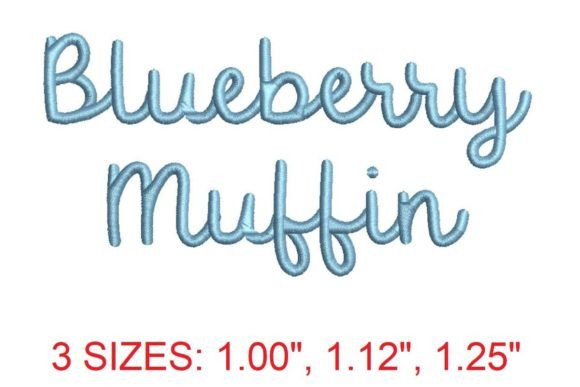
As an embroidery designer who’s stitched for over a dozen boutique brands—from Brooklyn-based loungewear labels to Midwest Etsy sellers—I opened the Blueberry Muffin Embroidery Font file with quiet anticipation. Not hype, not marketing copy—just the raw expectation of what this design would *do* on fabric. The name alone sets a tone: warm, approachable, slightly nostalgic—but not cloying. It whispers “baked fresh,” not “cartoonish.” That matters. On a premium sweatshirt, first impressions are tactile *and* visual: how the thread catches light, how the curves sit against ribbed cuffs, how the letterforms hold up at 2.5 inches wide on a chest placement. This font delivers soft-rounded terminals, gentle baseline undulation, and just enough internal detail—like subtle berry-shaped flourishes—to feel intentional without overwhelming.
Sweatshirt-Ready Personality: Where Charm Meets Craft
The Blueberry Muffin Embroidery Font isn’t shouting—it’s leaning in. It reads as feminine *and* grounded, playful *without* sacrificing sophistication. That duality makes it ideal for small shop product lines targeting thoughtful buyers: think neutral heather grey sweatshirts where the stitch texture becomes part of the story, or deep navy hoodies where contrasting thread (think dusty rose or oatmeal beige) creates quiet luxury. On pastel lavender or sage green fleece, it reads sweet but never saccharine. And yes—it shines on oversized hoodies. The generous x-height and open counters mean letters breathe even when scaled up for back designs, while the consistent stitch density avoids that dreaded “puffy blob” effect common in overly dense script fonts.
Back To School, But Not Like You Remember
This isn’t clipart-style “ABCs” or rigid block letters. The Blueberry Muffin Embroidery Font brings warmth to academic season—perfect for boutique brands launching cozy, confidence-building apparel for students, teachers, or lifelong learners. Imagine it embroidered on the left chest of a charcoal crewneck: “Curious” or “Create” in soft matte cotton thread. Or stitched vertically along the sleeve seam of a cream hoodie: “Study Slowly.” It elevates the everyday ritual of getting dressed for learning—making custom apparel feel like self-care, not uniform compliance. For Etsy sellers, that emotional resonance translates directly to cart adds and repeat customers.
Real-World Sweatshirt Embroidery Considerations
Let’s talk practicalities—the things that separate a pretty mockup from a sellable finished product:
- Thread color contrast: Works beautifully with tonal stitching (navy on navy, heather grey on grey), but truly sings with low-contrast neutrals—oatmeal on tan, slate on charcoal. Avoid ultra-bright neons; they clash with the font’s baked-good warmth.
- Stitch density & fabric texture: Designed with medium-weight knits in mind, the Blueberry Muffin Embroidery Font avoids excessive underlay or fill-heavy letters. That means less puckering on brushed fleece and better drape retention—critical for cozy seasonal apparel that must feel as good as it looks.
- Stabilizer & hoop size: Standard cutaway works well for most sweatshirt weights. For ultra-soft French terry or lightweight blends, a light tear-away + topping combo keeps surface details crisp. Hoop size flexibility is implied by its clean layout—no sprawling flourishes that demand oversized hoops.
- Small-size readability: At 1.25 inches tall, it remains legible on sleeve accents or pocket tags. The rounded forms prevent “fusing” at smaller scales—a common pitfall with delicate script fonts.
- Washing durability: Balanced stitch density and smooth transitions suggest strong wash resilience. No thin, fragile stems or isolated satin columns prone to fraying after three cycles.
More Than Letters: How This Font Builds Brand Trust
For a small clothing brand or handmade business, typography is silent branding. The Blueberry Muffin Embroidery Font signals care—not just in execution, but in curation. When customers see it on your Etsy listing, they’re subconsciously registering: *This maker understands texture, mood, and audience.* It reinforces handmade authenticity because it doesn’t look mass-produced or auto-generated. Paired with thoughtful thread choices and precise placement, it transforms a basic sweatshirt into a signature piece—one people photograph, tag, and style intentionally. That visual recognition builds organic reach. That consistency across products (hoodies, tees, tote bags) strengthens brand identity without shouting.
From Mockup to Marketplace: Seamless Integration
The PES file compatibility is non-negotiable—and welcome. As someone who juggles five different embroidery machines weekly, I appreciate zero conversion friction. It drops cleanly into my workflow for printable mockups, lifestyle photography setups, and digital proofing with clients. No pixelated edges, no missing elements. That reliability means faster turnaround for custom apparel orders and smoother collaboration with print-on-demand partners. For Etsy sellers, that translates to faster listing updates, cleaner product photography, and higher perceived value in every thumbnail.
Final Notes for the Discerning Designer
The Blueberry Muffin Embroidery Font earns its place in my core design assets folder—not as a novelty, but as a versatile, emotionally intelligent tool. It performs reliably across fabric types, scales gracefully, and carries a distinct point of view. It feels premium because it’s considered, not crowded. Casual because it’s comfortable, not careless. Playful because it’s joyful—but never juvenile.
Before your next limited drop, ask yourself: Does this font reflect the feeling you want customers to carry home? With Blueberry Muffin Embroidery Font, the answer—like a perfectly baked muffin—is golden, tender, and deeply satisfying.